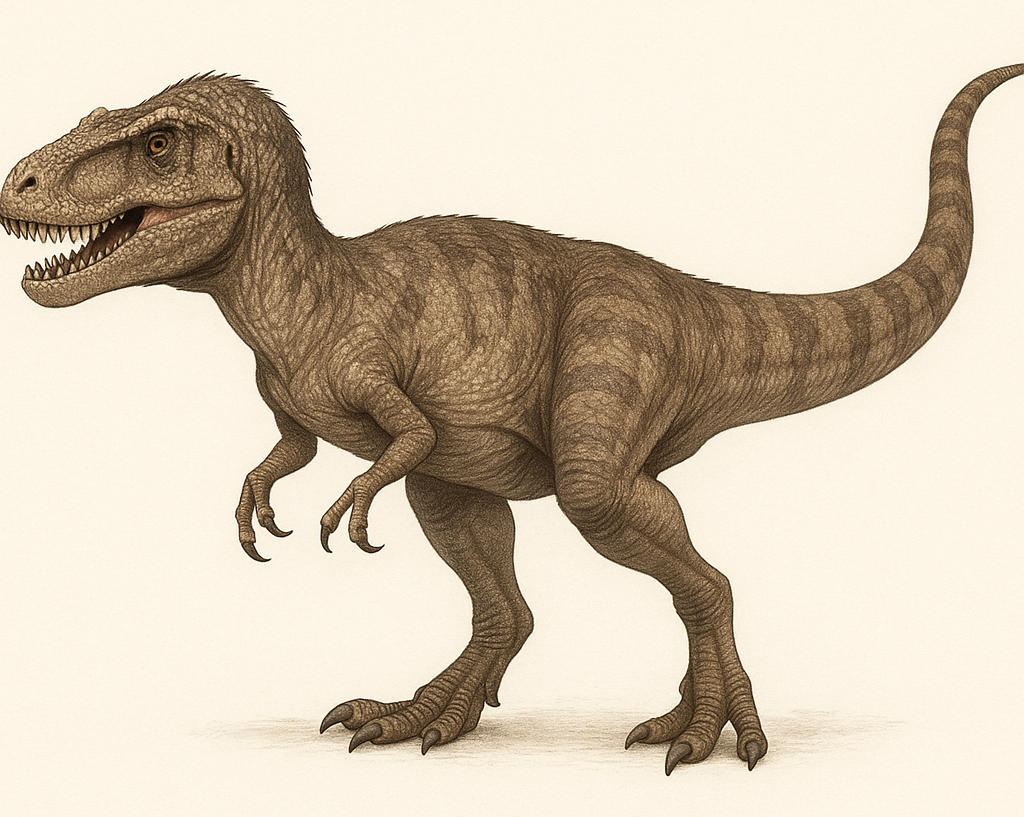
Millions of years ago, dinosaurs roamed the earth and claimed it as their own. N Now all that is left of them are fossils, preserved in sand and stone. As paleontologists excavate fossil sites around the world, they uncover unrecognizable fossils, leading to the discovery of new species. However, these discoveries often spark controversy between scientists, as many are hesitant to believe in the discovery of a new species.
In 1942, paleontologists uncovered a medium-sized skull and identified it as a type of tyrannosaur called a Gorgosaur. However, after much pushback from the scientific community, researchers claimed it was a skull belonging to a teenage T. rex.
Again, in 2006, paleontologists discovered another fossil specimen and declared it to be another juvenile T. rex. Then, in 2020, when the North Carolina Museum of Natural Sciences allowed scientists to begin studying these new fossils, researchers came to a different conclusion.
When paleontologists Lindsay Zanno and James Napoli saw the fossil, they knew it couldn’t be a young T. Rex, and further analysis on the skeleton only proved their assumption.
Data showed that the unknown skeleton had considerably longer forearms, fewer vertebrates in their tails and more teeth than T. Rex. Sometimes when organisms age, their bone structure changes; however, features like teeth and vertebrae are unlikely to change over time, suggesting that the new skeleton was not a young T. Rex.
In addition, the researchers measured cross sections of the dinosaur’s leg bone that preserved tree-like rings, which are used to estimate the age of the dinosaur when it became fossilized. They concluded that the dinosaur was about 20 years old when it died, indicating that it was a fully grown adult, not a juvenile. This confirms that the fossil couldn’t have belonged to a young T. rex, convincing paleontologists that it was an entirely new species.
After years of studying the fossil, researchers have concluded that both fossil specimens are, in fact, not a teenage T. rex, but rather an entirely new species called the Nanotyrannus. The discovery of this species will open a gateway for paleontologists around the world to discover more about this dinosaur and how it once lived.