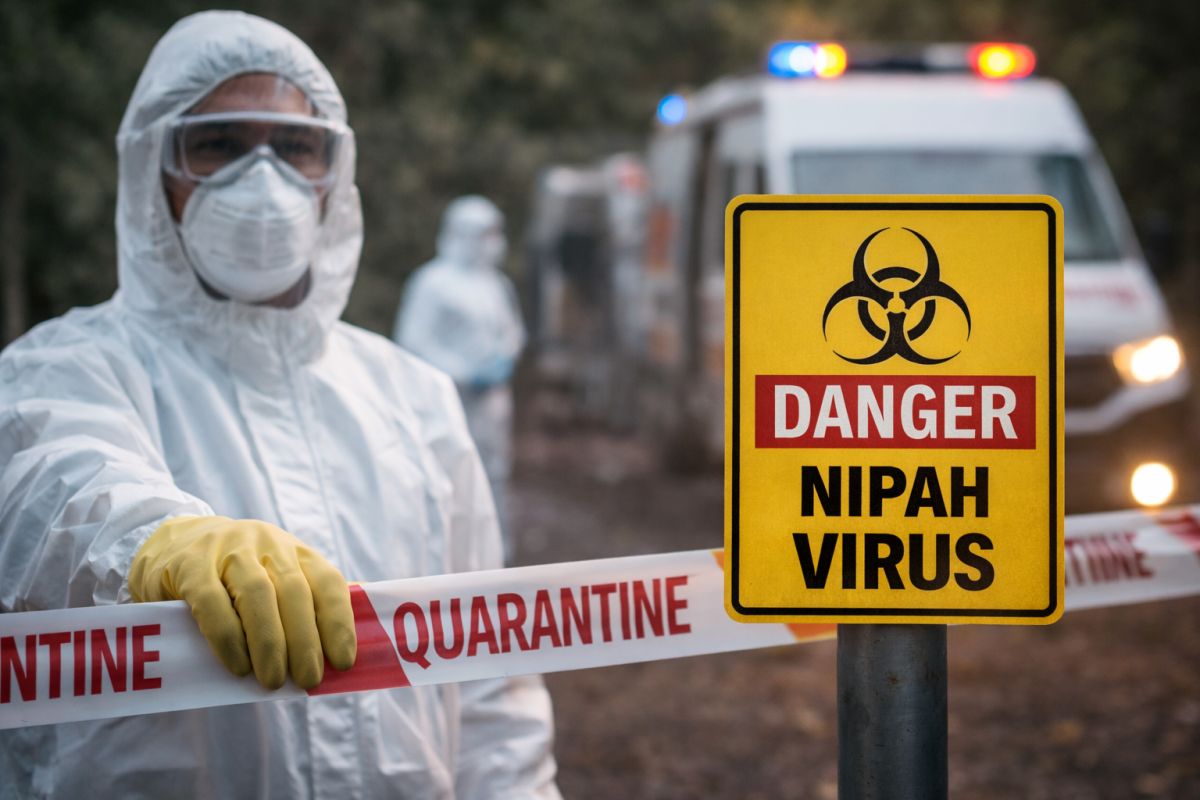
In the years following the COVID-19 pandemic, viruses remain a sensitive and closely watched topic worldwide. While many viral outbreaks pose little risk beyond localized illness, others require careful monitoring due to their severity. One such virus is the Nipah virus, which has recently resurfaced in eastern India.
As of late January 2026, health officials have confirmed two cases of Nipah virus infection in the Indian state of West Bengal. In response, approximately 100 individuals have been placed under quarantine as a precautionary measure. Authorities have emphasized that the situation is currently contained, with no evidence of widespread transmission.
The outbreak was first identified at a private hospital in the city of Barasat. Nipah virus is a zoonotic disease, meaning it is transmitted from animals to humans. Fruit bats are the natural carriers of the virus, and infection can occur through direct contact with infected animals or through consumption of food contaminated by bat saliva or urine.
Human-to-human transmission is possible but remains relatively rare. According to public health experts, close and prolonged contact with an infected individual is typically required for the virus to spread between people. This characteristic significantly limits the virus’s ability to spread rapidly through communities.
Early symptoms of Nipah virus infection resemble those of the flu and may include fever, headache and coughing. Symptoms generally appear within three to 14 days after exposure. In more severe cases, the virus can cause inflammation of the brain, known as encephalitis, leading to confusion, seizures and, in some instances, coma.
One of the most concerning aspects of the Nipah virus is its high mortality rate. Studies estimate that between 40% and 75% of confirmed cases result in death. The lack of a specific antiviral treatment or approved vaccine contributes to this elevated fatality rate. While researchers are conducting laboratory testing and clinical trials, no effective cure has yet been developed.
Despite its severity, experts stress that Nipah virus does not pose a global threat at this time. “Overall, the risk of regional or global spread of Nipah virus is very low,” said Linfa Wang, director of the GVN Center of Excellence. “Similar outbreaks have occurred repeatedly in India and Bangladesh, driven largely by specific cultural and environmental factors rather than sustained human transmission.”
Public health officials continue to monitor the situation closely, emphasizing the importance of awareness without alarm. Understanding outbreaks beyond national borders remains a key component of global health preparedness.