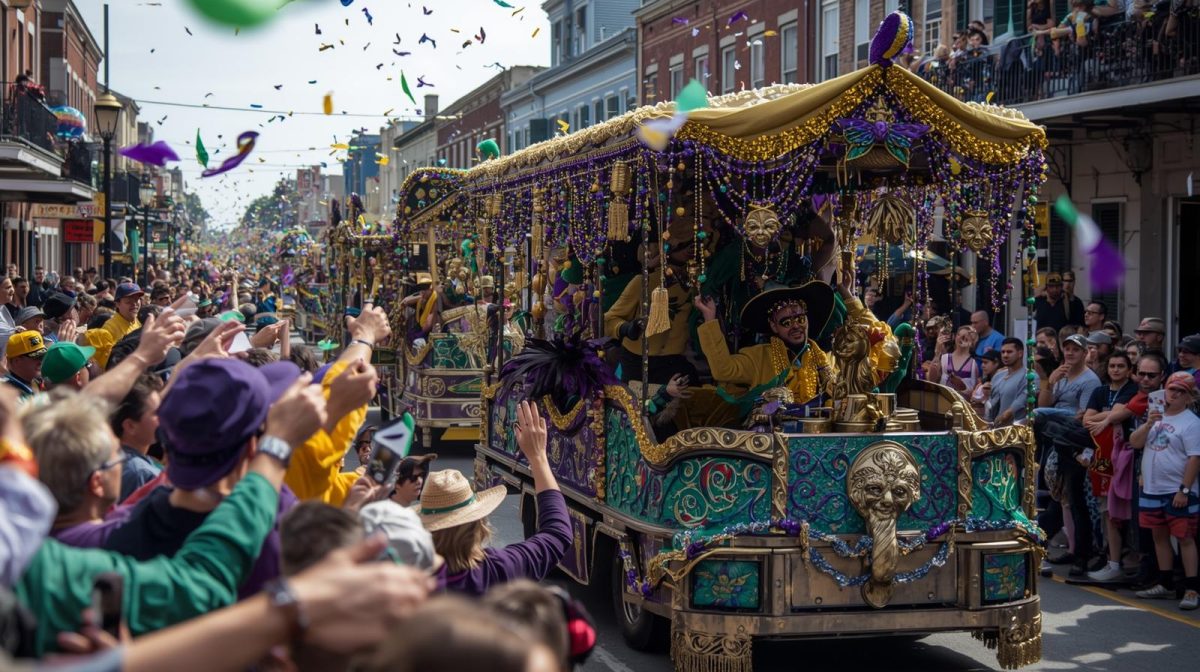
Purple, green, and gold beads flying through the air. People are in masks shouting from balconies while crowds are cheering below. Music is echoing down through crowded streets, and strangers are celebrating together like it is the biggest party of the year. To someone who is seeing this for the first time, it can feel almost crazy or even strange. Why would a whole entire city shut down just to throw beads and parade around giant floats? This is Mardi Gras in New Orleans!
At first glance, it just looks like an enormous party. What makes it the most surprising is its origin. For Catholics, Shrove Tuesday is one example, which is most commonly known as Fat Tuesday. Across the world, Shrove Tuesday is celebrated in unique ways: in London, people celebrate with an event called pancake day; in Brazil, there is a famously known carnival; in Germany, many go to festive costume balls; lastly in Denmark, celebrations closely resemble Halloween. Although these costumes may look very different, they all go back to the same purpose and roots.
Fat Tuesday is the day before Ash Wednesday, which marks the beginning of Lent in the Catholic Church. Lent has three main themes called “Pillars of Faith.” The three different Pillars of Faith are prayer, fasting, and almsgiving, so Catholics can prepare for Easter. Generally, Catholics mainly focus on the fasting part of Lent, which usually involves giving up something, like foods or luxuries. In tradition, Shrove Tuesday became the day Catholics would use up what they were going to fast from, so that they wouldn’t be tempted by it during lent. So while this day is associated with food and celebration, it goes into such a deeper meaning. It’s meant to be a joyful send off before lent starts, but also a great reminder for the preparation for one’s heart to be in the season of sacrifice and renewal.
One of the very well known celebrations for this Fat Tuesday is Mardi Gras. “Mardi Gras” is actually French for “Fat Tuesday.” This city has taken this day and made it a very unique and vibrant tradition for celebrating this event. Parades filling the streets, beads of many different colors being thrown from floats, and the people of New Orleans gather together with music, food, and community. While Mardi Gras is very famous for its liveliness and partying, its roots are still formed around the Catholic Church and the start of Lent. In New Orleans, the celebration fully takes faith, culture, and history, making it one of the most well known Fat Tuesday traditions in the world.
At the end of the day, traditions can look very different from each other around the world, but they often share the same meaning. From Pancake Day in London to Carnival in Brazil and Mardi Gras in New Orleans, each of these celebrations reflect the same time or preparation for Lent within the Catholic tradition. Fat Tuesday is way more than just a day of food and festivals. It’s a great reminder of the spiritual journey that starts with Ash Wednesday and ends with Easter. These celebrations truly highlight how faith can be expressed through culture, bringing many together while also still going back to reflection, sacrifice, and renewal.