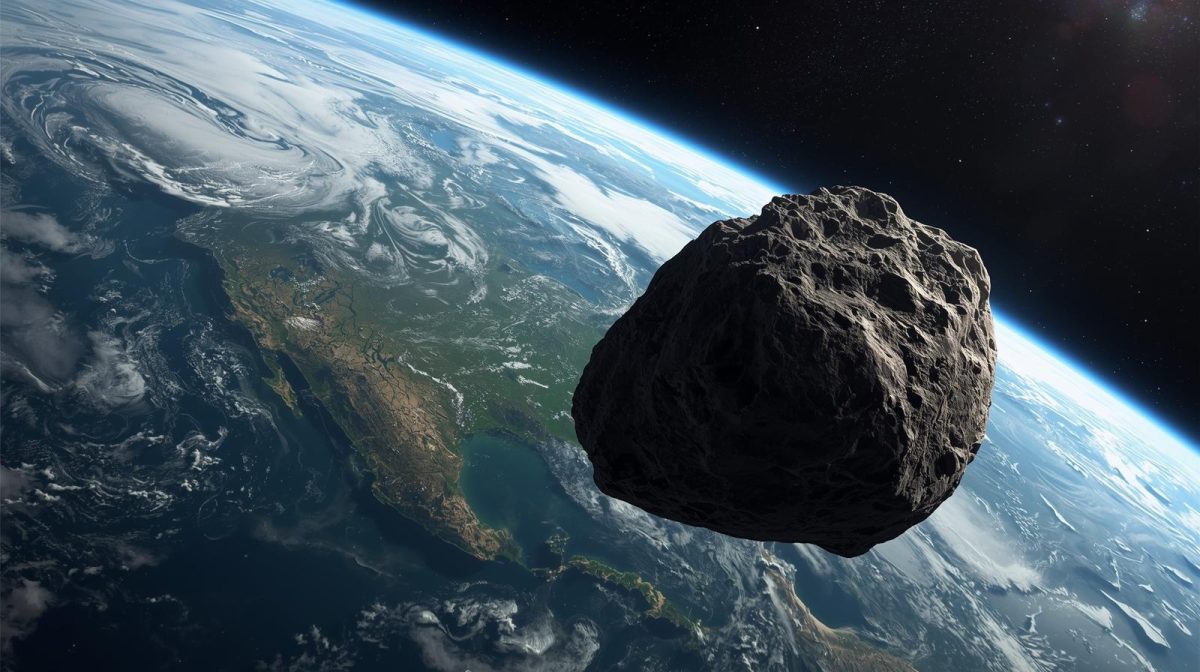
Current theories claim that life on Earth evolved over time from high temperatures and pressures that occurred as Earth formed. However, according to a recent study done by astrobiologists at John Hopkins University, a new theory is emerging suggesting that life on Earth may not have originated here.
When studying Earth’s thinnest and strongest lifeforms, such as tardigrades and extremophilic microbes, scientists deduced that these organisms could survive a journey through space if attached to asteroids, leading them to question if life arrived on this planet from elsewhere.
In the experiment, astrobiologists created a device to simulate the extreme pressures and temperatures a microorganism would face when riding upon an asteroid.
The organisms were subjected to pressures around ten times that of the deepest point of the Earth’s oceans, the Mariana Trench, which would kill nearly all life forms. Despite the unfathomable intensity of the pressure, the organisms survived, proving their resilience and strength in the midst of stressful conditions.
Then, the scientists experimented with Deinococcus radiodurans, Firing high speed missiles at the organism, the researchers simulated pressures and temperatures similar to an ejection from Mars.
The missiles hit the microbes at a speed of around 300 miles per hour, which equates to around 3 gigapascals of pressure, and, to the researchers surprise, the organisms lived. Although there were a few ruptures to the organism’s internal membranes, nothing proved fatal.
The astrobiologists involved with the experiment stated that this information helps to support a new theory that life on this planet may have originated from Mars, and hitched a ride on an asteroid bound for Earth.
In addition, this data suggests that it is possible for life to spread between planets, which can be applied to human space travel, possibly leading to the creation of new precautions regarding the exchange of life and preventing contamination.
Looking ahead, the scientists plan to continue this experiment on more types of extremophiles to further their knowledge and obtain more information.