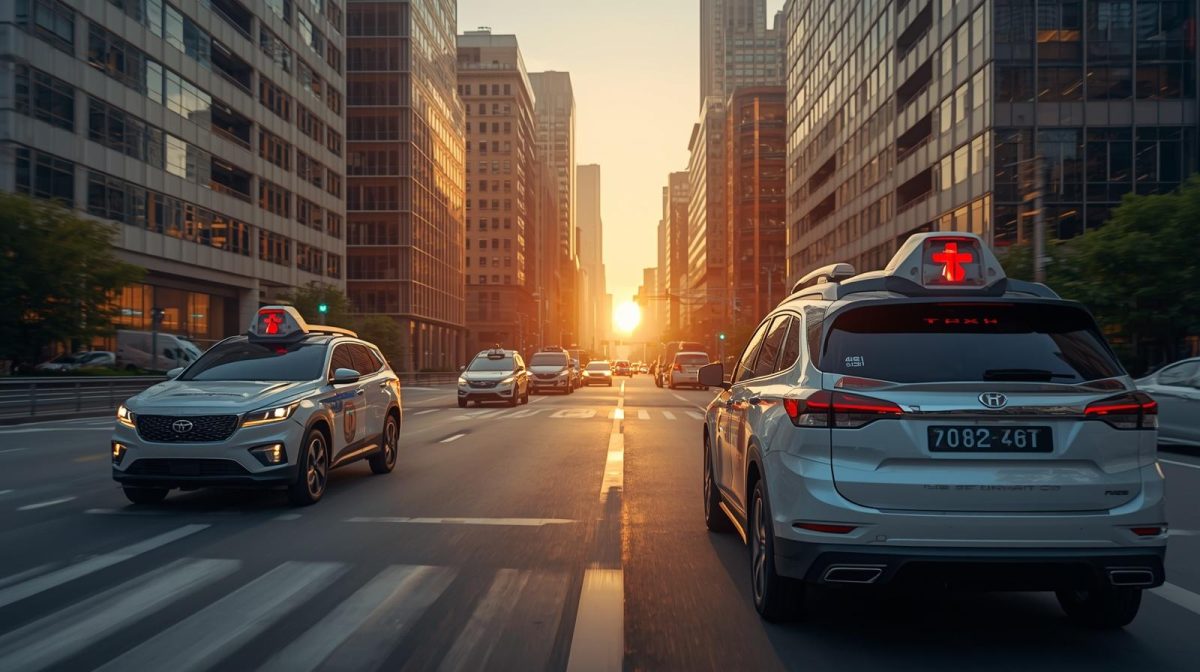
Uber, a rideshare company, recently announced a huge partnership with an electric vehicle manufacturer, Rivian. This is a part of Uber’s growing push to be a part of self driving transportation for guests. This deal has plans for Uber to invest up to $1.25 billion into Rivian in hope for about 50,000 robotaxis.
A robotaxi is a self-driving car that transports people around without the need of a driver. We can see companies taking approaches like this already to decrease their driver costs. For example, Waymo uses this approach in their Jaguar I-PACE self driving taxis.
Uber is planning on purchasing 10,000 of Rivian’s self-driving version of their upcoming R2 vehicle. These vehicles will work as the robotaxis. They hope to get these vehicles out by 2028 in cities like Miami and San Francisco. They will be able to purchase 40,000 more vehicles in 2030 if they choose to.
In the past, Uber has tried to have robotaxis, but it has always fallen short. This new shift highlights how the company is now focused on teaming up with other businesses that already are specialized in self driving vehicles. By doing this, Uber can lessen their role or attempt to build the technology and vehicles, but still play a huge role in transportation.
This is the second major deal Rivian has made in recent years. Back in November of 2024, Rivian and Volkswagen announced that they will be working together. The deal was that Volkswagen was going to invest $5.8 billion into Rivian, so that they can use their software in VW vehicles as soon as 2027. This is a lot for one company to do, but if done right it can allow Rivian to have a position in the market with a lot of long term growth.
Overall, this agreement is going to benefit both companies substantially, and it reflects the competition to develop good robotaxis. While robotaxis are still in development, this deal shows that both companies are betting on a future where self driving cars are a more common way to travel.