In a world rapidly evolving in space exploration Blue Origin has taken another step to make space travel more sustainable and cost effective. The aerospace company, founded by Jeff Bezos, also the founder of Amazon, is continuing to push forward with its reusable rocket program, an approach that could affect the economics of spaceflight for years to come. As more private companies enter the industry, reusability has become one of the most important goals in reducing launch costs and increasing access to space.
Blue Origin, located in Kent, Washington and was founded in 2000. The company has two rocket models, New Shepard, a suborbital rocket that is used for space tourism and research, and New Glenn, a much larger heavy lift rocket used for sending satellites into orbit or to Mars. Both rockets were named in honor of American space pioneers, Alan Shepard, the first man in space and John Glenn the first American to orbit Earth. Both rockets are reusable and can land vertically, similar to the SpaceX Falcon rockets. This vertical landing technology is part of a growing trend to reduce waste and maximize the lifespan of the expensive hardware.
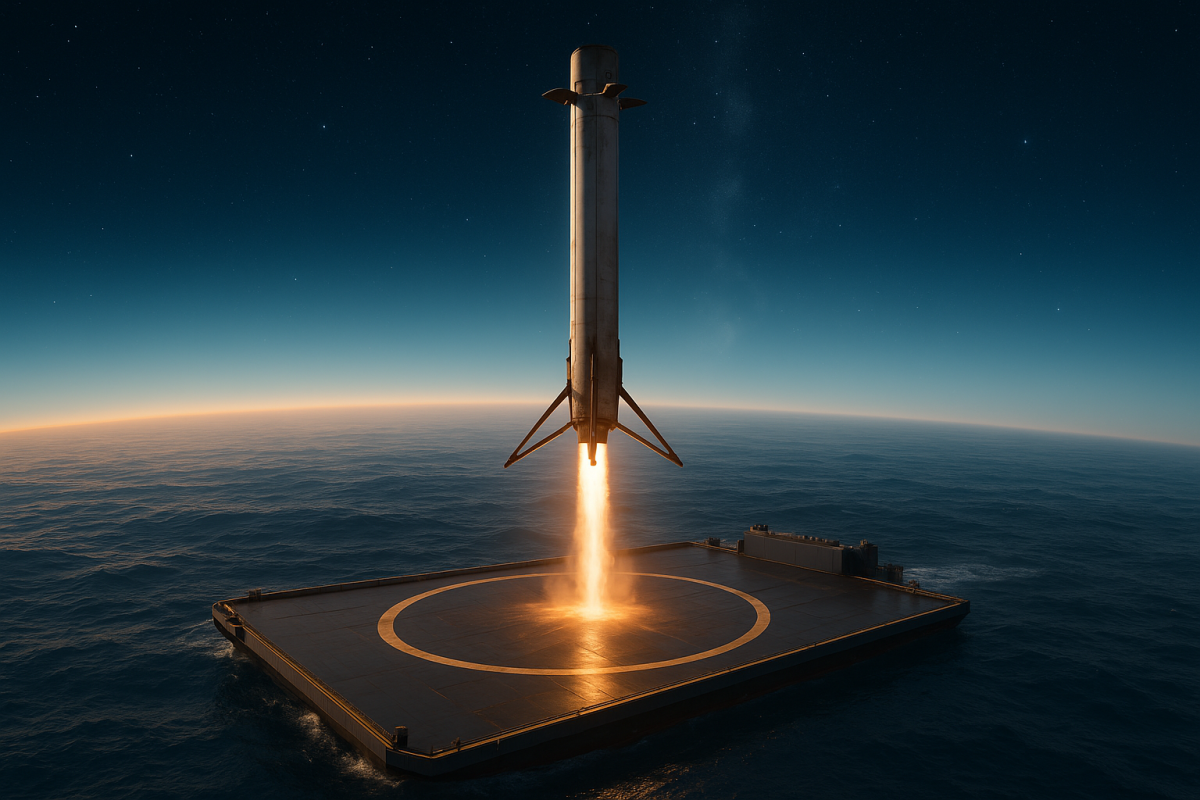
November 13 was a big day for the company, achieving a new type of booster recovery. The launch from Cape Canaveral carried two satellites for NASA to orbit Mars. After the first stage booster separated, 79 miles up, it began a controlled descent towards Earth. It landed on a barge, about the size of a football field, in the Atlantic Ocean.
This launch was the second for the New Glenn, the first occurred in January 2025, and the first time Blue Origin was able to land such a massive booster on their second try. Many space lovers find this to be a big deal, because Blue Origin is rapidly closing in on a kind of reusability that made SpaceX a dominant force in rocket development. If the company continues to improve at this pace, industry experts believe New Glenn could eventually compete directly with other major commercial launch systems.
The company says New Glenn is foundational to their long-term vision, not just for NASA missions, but for future commercial launches and even lunar work. With this success, Blue Origin is clearly sending a signal, it’s not just about going to space, it’s about going there again and again.