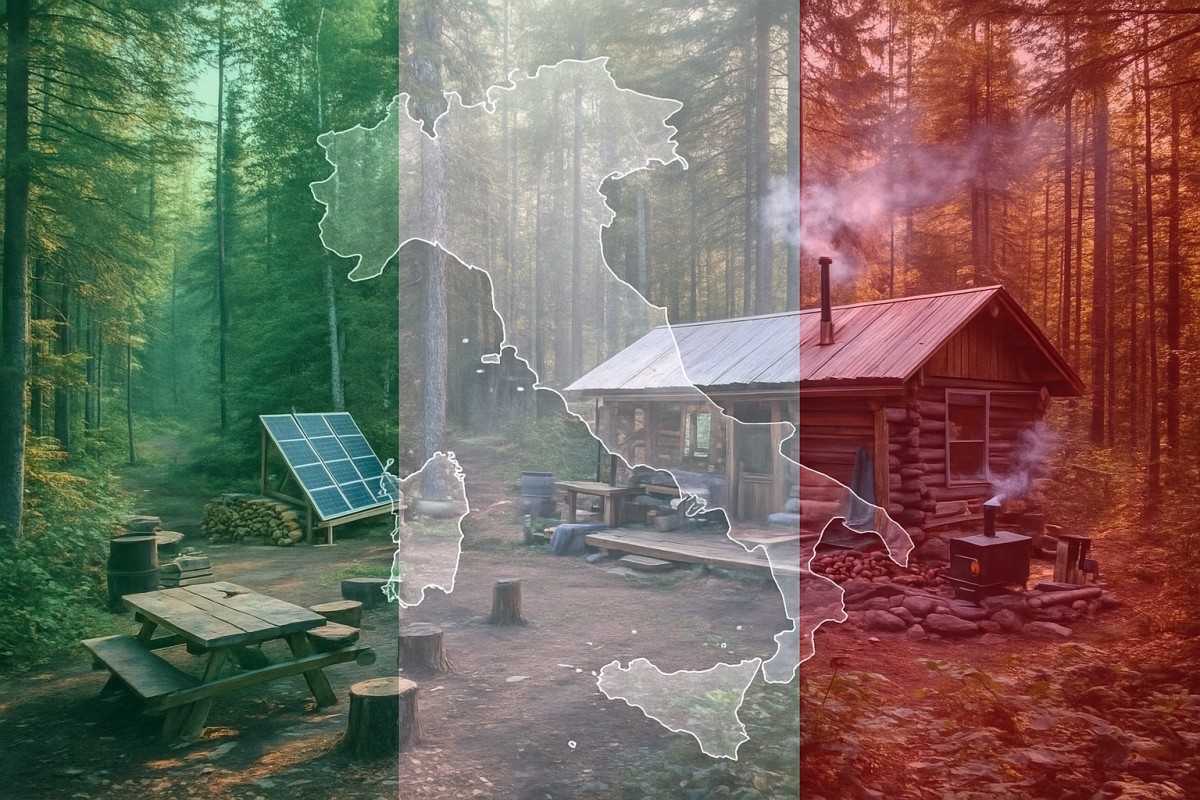
A family of five living off-grid in a remote cabin in central Italy has been ordered by the courts to leave their home and place their children in foster care.
The family, made up of parents Nathan Trevallion and Catherine Birmingham and their three children, had been living on a small farm in the Italian countryside. They kept horses, donkeys and chickens, living what they described as a simple, self-sufficient lifestyle. However, Italian authorities recently intervened, saying their living conditions were unsafe for the children.
According to the court in L’Aquila, the children — an eight-year-old and six-year-old twins — were removed from the home and placed in a church-run care facility. Their mother, Birmingham, is staying in the same facility but has limited contact with them. Their father, Trevallion, remains at the cabin.
Trevallion, 51, is a British former professional chef, while Birmingham, 45, is an Australian life coach and former equestrian trainer. The court order stated that “the family unit lives in housing hardship as the building has not been declared habitable.” Officials also said the family had no social interaction, no fixed income, no toilet facilities, and that the children were not attending school. The order cited “serious and harmful violations” of the children’s rights to physical and mental well-being.
The family’s lawyer, Giovanni Angelucci, said the couple’s way of living was intentional and sustainable. He explained that the family heats their home with fireplaces and uses solar panels for lighting and charging devices. The family removed running water from their home to avoid exposure to microplastics and instead draws fresh water from a well on their property.
The case has drawn international attention and sparked controversy online. Tens of thousands of people have signed a petition calling for the family to be reunited. Supporters argue that the parents were living a natural lifestyle by choice, while critics say the children’s health and education must come first.
The court has not announced when or if the children will be returned to their parents, but the case continues to raise questions about off-grid living and how governments define acceptable living conditions for families.