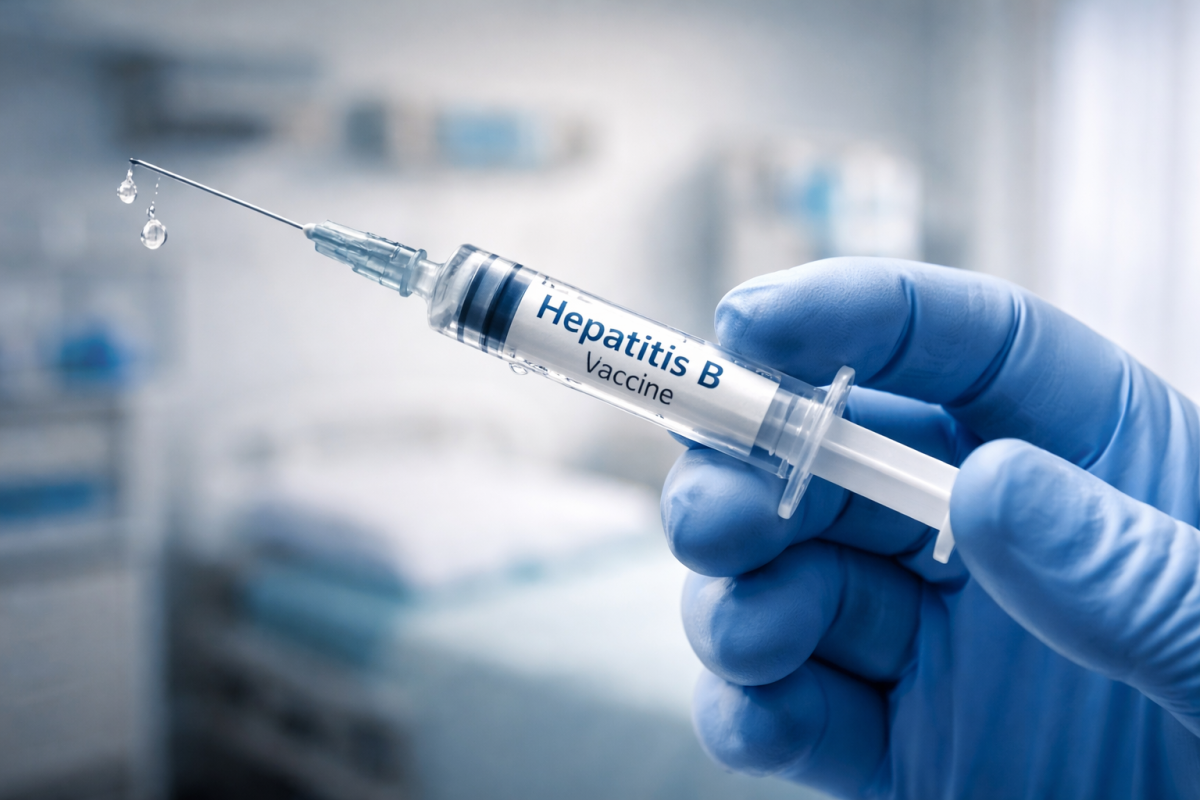
A federal vaccine advisory committee appointed by Health and Human Services Secretary Robert F. Kennedy Jr. postponed a key vote Thursday on hepatitis B vaccination recommendations for newborns, delaying the decision until Friday to allow members more time to review the proposal’s language.
The committee’s decision followed confusion among panel members regarding how the recommendation was worded. Dr. Cody Meissner, a professor of pediatrics at the Geisel School of Medicine at Dartmouth, said the delay was necessary to ensure members fully understood the implications of the vote.
Hepatitis B can be transmitted from mother to child during childbirth and may lead to chronic liver disease, liver cancer, or early death. Public health experts warn that reducing vaccination rates among newborns could increase the number of chronic infections in children.
“We have a vaccine that is highly effective at preventing an incurable disease,” Neil Maniar, a public health professor at Northeastern University, told CNBC. “We should take full advantage of that.”
The recommendation for a hepatitis B vaccine dose at birth was introduced in 1991 and is credited with reducing infections among children by approximately 99 percent. Maniar described the policy as a major public health success and cautioned against reversing it.
“The reconsideration of the newborn hepatitis B vaccination on the established schedule poses a grave risk to the health of children and the public,” said Dr. Richard Haupt, Merck’s head of global medical and scientific affairs for vaccines and infectious diseases.
Former Merck executive Phil Grabenstein, who said he no longer has financial ties to the company, also expressed concern about disruptions to vaccine supply chains.
“If you disrupt the status quo without warning, then there could be too much of some things and not enough of others,” Grabenstein told CNBC. “That could easily create spot shortages.”
The committee is expected to revisit the issue Friday, with public health officials closely watching the outcome due to its potential impact on childhood vaccination rates nationwide.