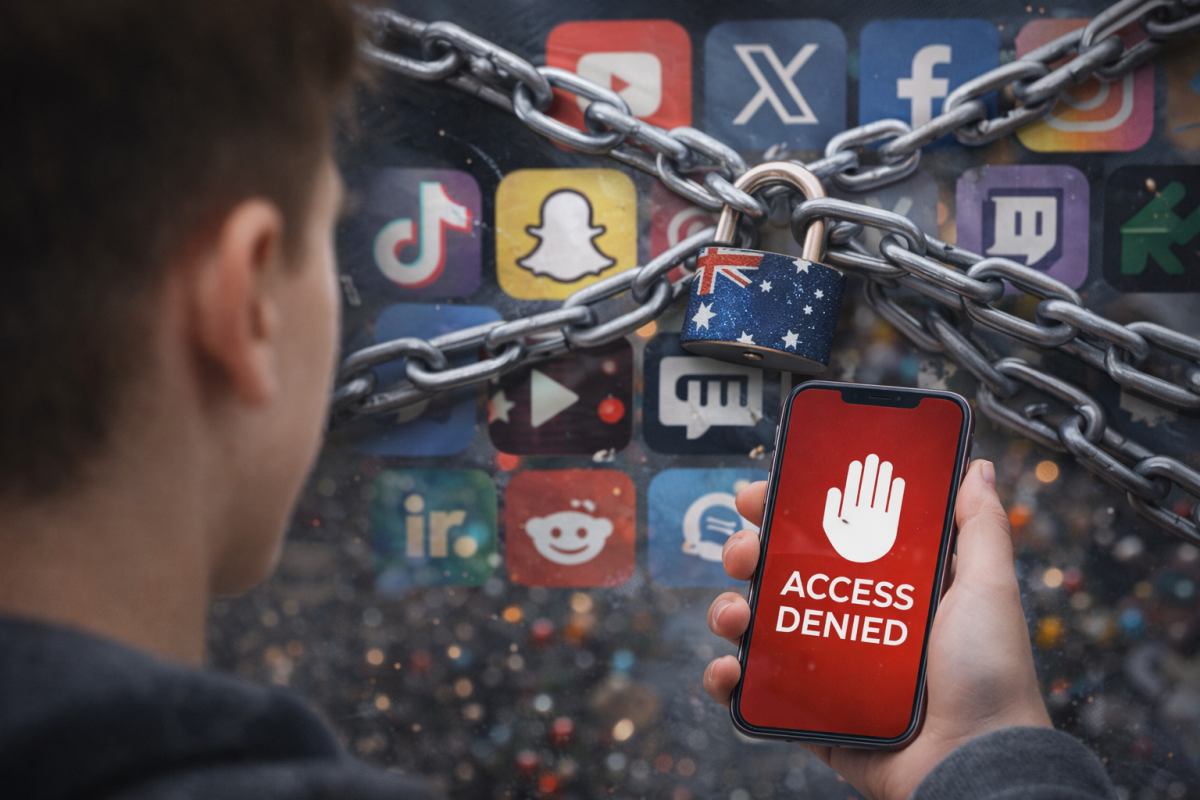
On Dec. 10, 2025, Australia officially put its first nationwide teen social media ban into effect. The new law blocks millions of Australian children from accessing platforms such as YouTube, X, Facebook, Instagram, TikTok, Snapchat, Reddit, Twitch and Kick. The policy is designed to limit social media use among minors and reduce the potential mental health risks associated with excessive screen time.
Prime Minister Anthony Albanese called the ban a “proud day” for Australian families, saying it gives parents more support in managing their children’s online habits. Many parents have expressed relief, believing the law will reduce exposure to harmful content and online pressure. Teenagers, however, have reacted very differently.
Several teens interviewed by local media said they already plan to find ways around the restrictions.
“It’s just kind of pointless. We’re just going to create new ways to get on these platforms, so what’s the point?” said 14 year old Claire Ni.
Others said they felt neutral about the ban or unsure how it would affect their daily lives. Australia’s eSafety Commissioner Julie Inman Grant acknowledged that enforcement will not be easy. She said she is prepared to “play the long game” when it comes to compliance, especially as some teens have already claimed they found workarounds shortly after the ban took effect.
X, owned by Elon Musk, was the last of 10 major platforms to restrict access for underage users. The company released a statement confirming it would comply with Australian law.
“It’s not our choice. It is what the Australian law requires,” X said on its website.
Other companies have responded differently. Meta and Snapchat have emphasized parental controls and suggested that app stores should share responsibility for enforcement. TikTok, Reddit and Twitch have complied with the ban but raised concerns about free speech, enforcement challenges and increased isolation among teens.
Australian officials say the list of restricted platforms may change as new apps and trends emerge, making this ban an ongoing and evolving issue for families, companies and lawmakers alike.