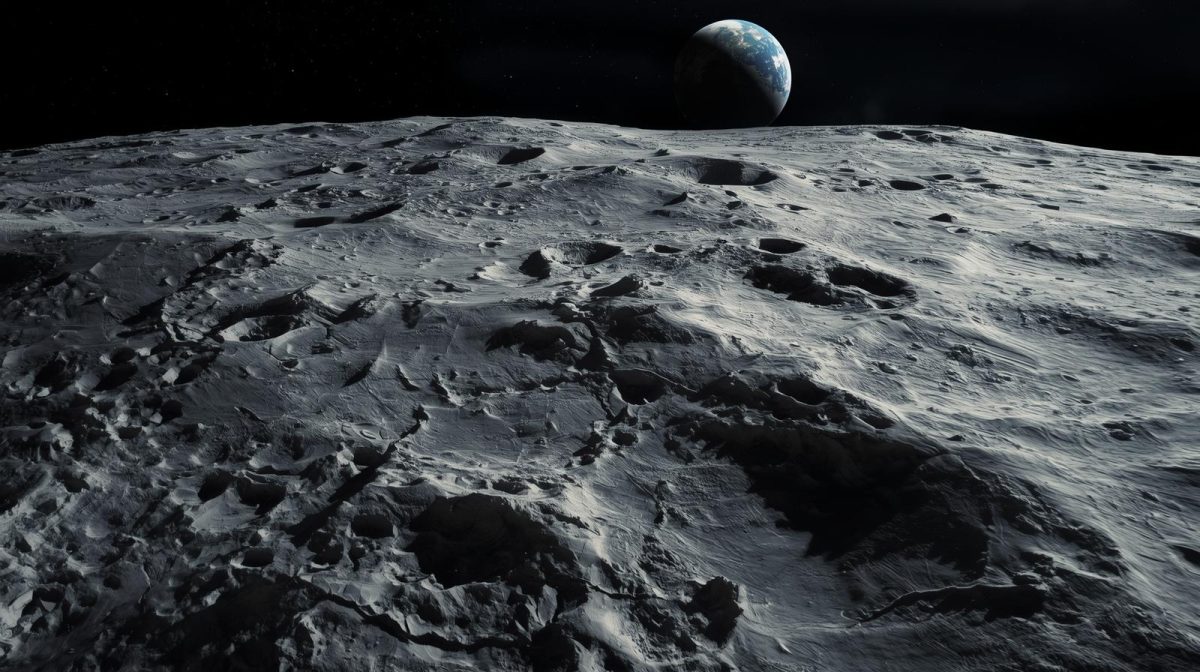
The moon has caused wonder for scientists for centuries. As Earth’s closest neighbor in space, it has been questioned for generations, yet many of its important discoveries have only been made within the last 100 years. Now, a new study on small mare ridges (SMRs) is revealing something surprising; the Moon is shrinking.
For a long time, scientists believed the Moon was mostly inactive, just a floating rock. But now, new research shows that the Moon’s core is slowly cooling. As it cools, it contracts. This shrinking creates stress beneath the crust. Instead of breaking apart and cracking, the stress causes parts of the crust to be pushed upward, creating narrow ridges known as small mare ridges (SMRs).
These ridges are mostly found in a region of the moon known as the lunar maria. The lunar maria was formed billions of years ago by volcanic lava flows. Thanks to technological advances, scientists have discovered more ridges through mapping from satellites. This major find shows new evidence that the Moon is still geologically active.
Due to these findings, the ridges lead to “moonquakes.” During the Apollo missions, the astronaut crew left behind many different scientific instruments for them to monitor a variety of tests, one being seismic activity. These instruments detected seismic activity underneath the Moon’s surface. Scientists have come to the conclusion that when the Moon’s crust compresses and shifts along faults, it releases energy in the form of seismic waves, similar to earthquakes on Earth.
The findings of new ridge zones suggest that moonquakes could happen in more areas than previously thought. This is especially significant as astronauts prepare for future missions, including plans to send astronauts back to the moon.
Thanks to all of this research, we have learned that the moon is far from being a lifeless and frozen rock, the Moon is still changing. Each new discovery reminds us that even our closest celestial neighbor holds mysteries waiting to be uncovered.