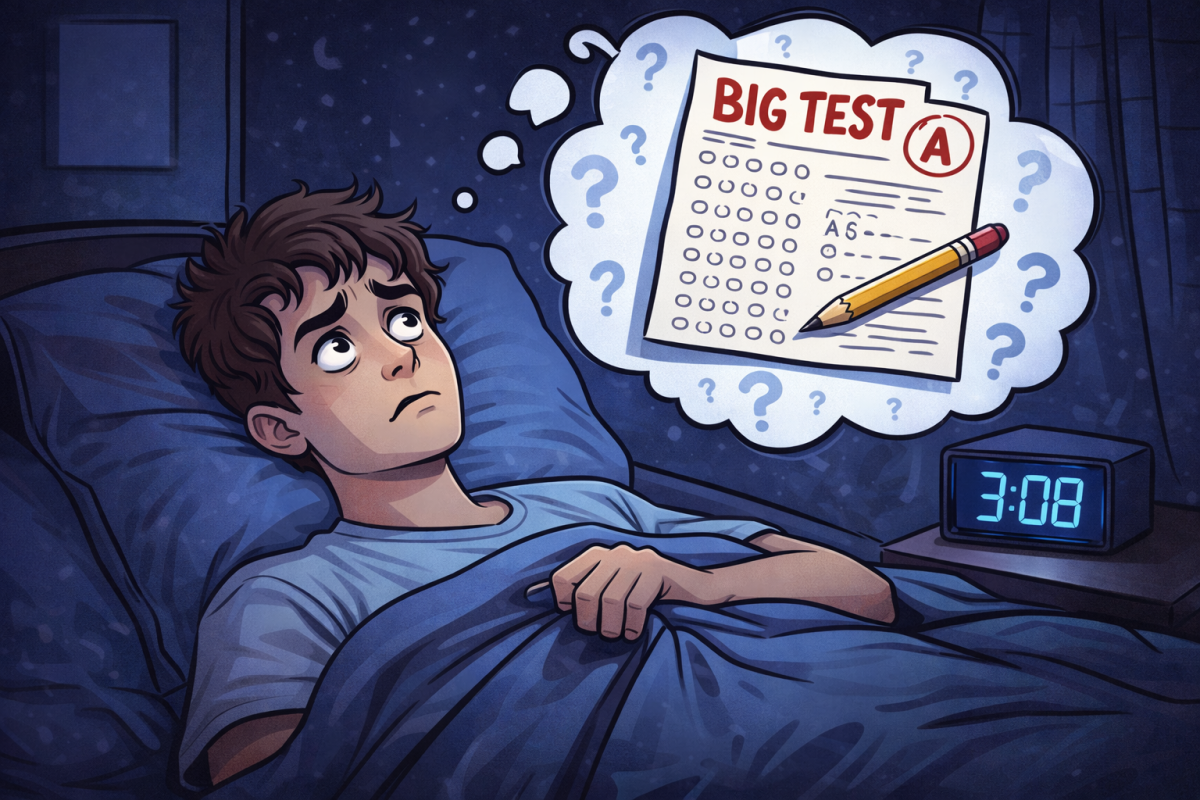
Some people, including myself, struggle with sleeping, or more specifically, falling asleep. Whenever I had an important test the next day, like an AP exam at the end of the year, I would end up tossing and turning because sleep did not come as quickly as I wanted it to. I would lie there staring at the ceiling, tormenting myself with thoughts like, “I’m going to be up all night,” before eventually falling asleep anyway. I know others experience this same problem, so I want to shed some light on it.
First, the constant thinking about sleep needs to stop, especially frustration surrounding it. Sitting in bed and worrying about how your quality of sleep will affect your performance the next day only increases stress. For some reason, the brain associates stress with danger. When the brain feels unsafe, it resists entering its most vulnerable state, which is sleep. Instead of worrying, remind yourself that you will fall asleep eventually because the body requires it.
Although this sounds easy, it is not always simple to put into practice. At least for me, it took time. To help, I use two exercises that have made a difference. About one or two hours before bed, I set aside time for myself. I avoid blue light from my phone or television and sit down to write a to-do list for the next day. I include anything I did not finish or tasks that are lingering in my mind. This helps because when those thoughts pop up at bedtime, I can tell myself they are tomorrow’s problem and my day is done.
After that, I read a book to fill the time before going to sleep. When I finally lie down, I remind myself that sleep will come eventually. I also try breathing exercises or anything that distracts my mind from focusing on sleep itself. As Stanford sleep specialist Dr. Rafael Mayo once said, “Insomnia is a thinker’s condition.” Sometimes, the best solution is to stop thinking altogether.