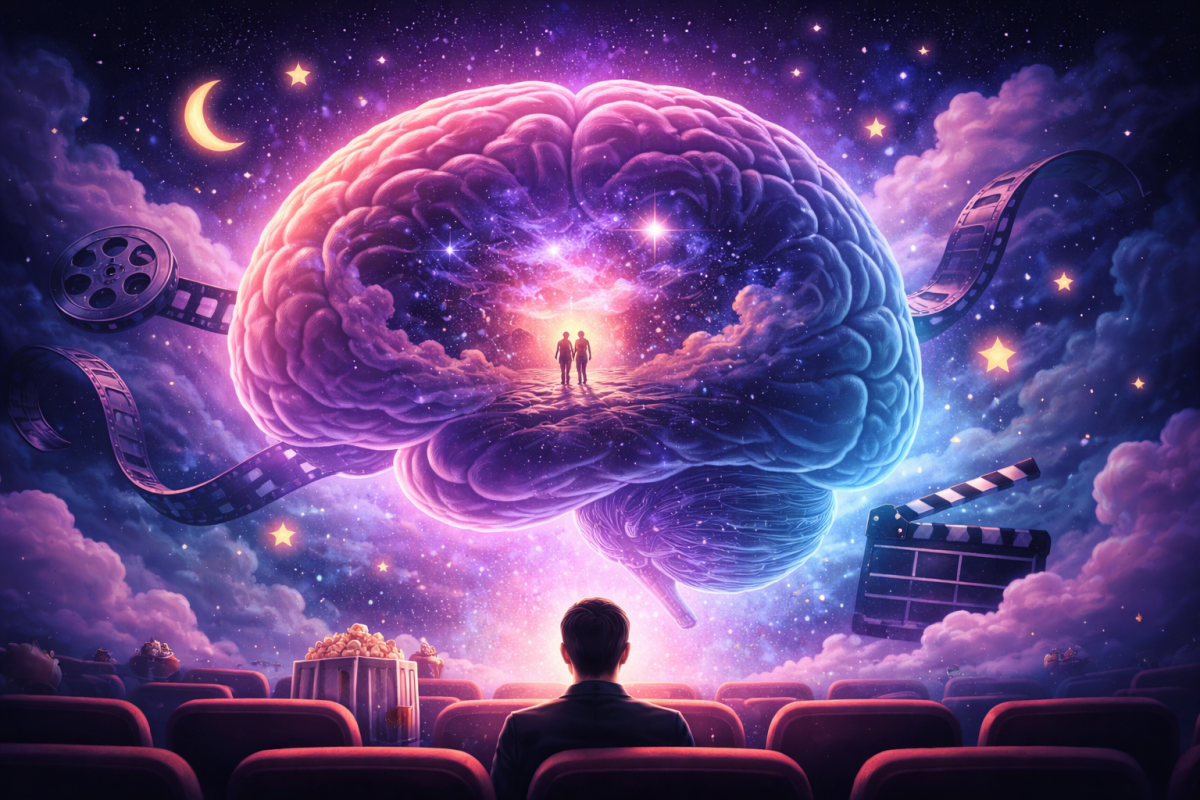
Dreaming is a form of memory consolidation. The brain replays parts of the day and selects certain moments to store in long-term memory. That is why people you interacted with during the day often appear in your dreams, or why familiar places like your local McDonald’s might become the main setting. If dreams come from real experiences, then why do they not always match reality? Most people have not fallen from deadly heights or seen unicorns, yet these situations still appear in dreams.
When a person dreams, the brain’s executive network, which controls logic and reasoning, temporarily shuts down. This allows the imagination network to take control. As a result, the brain freely weaves memories, emotions and ideas together to create unusual narratives that do not follow real-world rules.
Your awake self and dreaming self operate very differently. For example, if you were asked to creatively redesign a helicopter while awake, you might change its color or shape. In a dream, the helicopter might be half dog. That difference shows how unrestricted the dreaming brain can be.
This lack of limits has benefits. When the imagination is not immediately dismissing ideas, creativity can thrive. The strange stories created in dreams help train the brain’s imagination and allow people to better understand themselves emotionally. That may be why children dream so frequently, since they are still learning who they are.
Dreams can also help people emotionally prepare for situations or even solve problems. While dreams are not always useful for challenges that rely on words or logic, they are powerful when it comes to visual thinking. Dreams should not be interpreted literally, but rather symbolically.
Whether they involve falling, flying or scenes that fade from memory, dreams are never useless. They are the brain’s creative cinema, working quietly while we sleep.